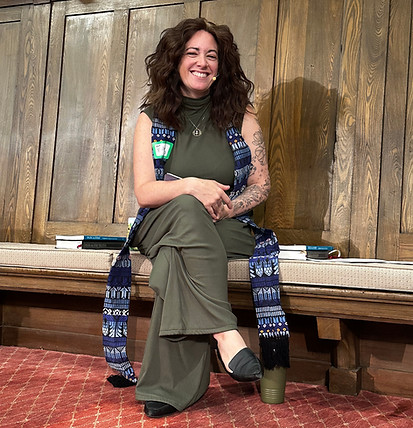
Welcome to First Universalist Church.
We're glad you're here.
Here at First Universalist, we are more than a church. We are a loving, justice-seeking spiritual community. We are proudly rooted in our downtown neighborhood, yet our members come from all over the greater Rochester area. Guided by our faith in the worth and dignity of all, we build community that includes—a faith that welcomes you in your wholeness. Unitarian Universalists are people of many religious backgrounds, people of many racial and cultural backgrounds, people of many life experiences and identities. We are a welcoming congregation that actively affirms and encourages the full participation of all.
Our Mission
We dedicate ourselves to the mission of this church: to nurture the spirit, and serve the community.
Our Beliefs
In Unitarian Universalism, you can bring your whole self: your full identity, your questioning mind, your expansive heart.
Our beliefs are diverse and inclusive. We have no shared creed. Our shared covenant (our seven Principles) supports “the free and responsible search for truth and meaning.” Though Unitarianism and Universalism were both liberal Christian traditions, some of us embrace diverse teachings from other faiths, hold humanist beliefs, or call ourselves atheists.
Unitarian Universalists reflect together about important questions, including:
-
The existence of a Higher Power
We are united in shared experience: our open and stirring worship services, religious education, and rites of passage; our work for social justice; our quest to include the marginalized; our expressions of love.
UUA
We are a member congregation of the Unitarian Universalist Association, a progressive faith tradition inspired by wisdom from many spiritual sources.
For more information, please visit uua.org.